Showing posts with label About Fire --. Show all posts

Tuesday, February 2, 2021

Ancestors - Part Three


Release Work for the Ancestors

As I mentioned in Part One, back in the early-to-mid 1990s my focus was very much on the ancestors. I had begun to have dreams and experiences concerning my own ancestors, but also “the ancestors,” in general. I was overwhelmed with the feeling of many sad, desolate, and somewhat hungry ghosts wandering around. I had a sense that many of the ancestors—my own included—were not properly at rest, or able to go on to their next step, because they had not had proper death rites done for them. They wanted recognition; they wanted appreciation; they wanted to be mourned; and they wanted death rites done for them. I journaled these dreams and realizations, and worked with them in my magical group and on my own during the season of  Samhain.  

A couple years later, my good friend Mariposa had a powerful dream wherein she was part of a ritual being done for the ancestors. As she described the dream to her husband, he knew immediately that this was more than a dream, it was something they were being told to do.

Mariposa set November 11th —Old Samhain—as the date for this ritual and invited me to participate along with several of her other friends. Although she had some basic ideas for the ritual, she felt that the participants should co-create it, so we each contributed our ideas and thoughts during the planning process.

The pieces that I brought to this particular ceremony were ones that came to me quite strongly as I thought about the ritual and remembered my recent dreams and experiences. I had a strong hit that the ancestors must be thanked for their lives, as well as acknowledgement given for all they had accomplished in their lives. I felt they needed to be appreciated as individuals, not just as ancestors. I had an equally strong hit that we must grieve for them—for all the sorrows, tragedies, and  disappointments of their lives, and all their unfulfilled hopes and dreams. And this was to be done in a ceremonial way.
                                                
I also had a very strong sense that there were some ancestors who were still earthbound, to one extent or another, and that the way to solve this was—after the thanking and grieving parts of the ritual had been done—to ceremonially release them from the power of the Four Elements. The Elements, after all, are what constitutes our physicality. When someone passes away they pass out of the realm of the Elements and into the realm of Spirit. But if they were not at peace when they passed—due to, perhaps, unfinished business, strong emotions, or a host of other things—there’s a chance that these things might keep them tied to the earth, the physical realm, and the land of the living. This is not good. So when someone suggested we dance at the end of the ritual, I knew we could use this dance to release the elemental connections.

All of these pieces—the thanking, the grieving, the release of the elemental connection—were included in the final version of the ritual.

We began, some months before the ritual, by journeying inward to find ancestors and/or ancestral lines that wanted to be worked with in this way. We spent time trying to learn as much as we could about them—their lives, their cultures, their times—and we resurrected old family stories about these ancestors, or the lines, so that we could share within the context of the ritual.

On the appointed date, November 11th, we all gathered at Mariposa’s home. We began the ritual with a Feast for the Dead—a specially prepared meal eaten in silence at a table that had places set for the ancestors. After this we robed up and began the ritual itself. After calling in the Elemental and Directional powers, we invoked the goddesses of these particular ancestors, as well as power animals related to the culture or the particular ancestors. Then, one by one, we told their stories which, to my surprise, proved unexpectedly emotionally wrenching. We thanked the ancestors, sent them our love and appreciation, and we keened for them. That too was very powerful; sound is a very potent way to move emotional energies. And we sang our Journey Songs for them, to guide them on their way to the Otherworld.

As the ritual drew to a close we began a circle dance, stopping in each direction to release any elemental bonds that might remain for them. This was an extraordinary experience for me. When we began the Feast for the Dead I felt like the ancestors were able to taste the food I was consuming, through me. I was very aware of them. And when we danced at the end I could literally feel the elemental bonds that held them—I could feel them within my body, as if I carried these bonds for them—and found myself consciously moving in a manner that shook those bonds loose, broke them, and let them slide off.

At the very end we did a bigger elemental release, one that dissolved the elements into one another and back into their primal source: the salt, representing the earth element, was poured into the water. The water was poured into a larger bowl of water which was eventually poured onto the earth outside. The sage representing the air element was burned, released into the air to disperse into the atmosphere; the fire element was released by extinguishing the candles.

When the ritual was done we went outdoors and jumped into Mariposa’s hot tub. It was a very cool, misty night. Above us, the waning moon peeked through the clouds. As I relaxed into the hot water I heard a strange, distant honking sound. I opened my eyes and looked upward, and saw, far above me, wild geese winging their way southward.

I was immediately reminded that it was Old Samhain, the time of the Wild Hunt, when the Lord (or Lady) of the Dead rides the night sky sweeping up the souls of the dead—who often take the form of wild geese or swans—gathering them up to take them to the other world.  

I  pointed upwards to the geese, noting this to the others. The ancestors were on their way home. It was a perfect ending to a perfect—and very powerfully magical night. 


(c) Margie McArthur, 1995

Monday, April 23, 2012

About Fire — the Sun, the Hearth, the Goddess, and Life; Part Three


Hearthfire, Heartfire, and the Goddess

Our ancestors knew what we've forgotten: that the Hearthfire Goddess—she who guards and protects the humble fires of our hearth—is truly the Guardian of all the Fires, from Sun's fires to Earth's heartfires  and all those between, including our own inner fires. In one sense, She IS Fire and all other fires are manifestations of her. In fact, the awesome, transformative power of fire to bless, purify and change energy from one form to another is the power of the Goddess.

For thousands of years people were so well acquainted with this Goddess within the Hearthfire as the Center Point that they had temples to the Hearth Fire Goddess of the State, and Priestesses whose sacred duty it was to tend these State Hearthfires, which were the central fire, the focus, the hearth of the nation, representing its heart. The Vestal Priestesses of Rome served the Goddess Vesta in this way. In Ireland, priestesses tended Brigid's sacred fire that burned for at least 1000 yrs before it was extinguished by Protestant reformers. Tending the Sacred Hearthfires of the Goddess was everyday reality in both Temple and home.

The Hearthfire is the Heart fire, be it of nation or of our humble homes. But these hearthfires of home, of temple, of nations are but the sparks of a larger hearthfire, what I call the Cosmic Hearthfire: the Fire that is at the very heart of life. This Inner, Cosmic Hearth Fire is that from which all other fires spring and come into manifestation. It is this Fire, ultimately, that we serve, we who serve fire. It is the fire of Life itself.

Fire needs to burn. The Fire that is the Cosmic Hearth Fire manifests itself on this plane as Life—and it  requires our service, our tending, to keep it going. To be alive is to burn with this power of fire. As Beings who are part of this Life Stream and not separate from it, this fires requires our interaction with it. Untended by us, this Cosmic Hearth Fire's manifestation on this realm will go out, or burn out of control in some way. It requires the service of priests and priestesses—dedicated to the Hearth—to tend and serve it. And by that wonderful principle of resonance, we serve this Cosmic Hearth Fire by serving our smaller fires, and our smaller fires by serving the Cosmic Hearth Fire. Every home hearthfire is a hearth of the Goddess. And what the service of fire entails is paradoxically a very big subject, yet simple at the same time.
 (c) Margie McArthur, 1995

About Fire — the Sun, the Hearth, the Goddess, and Life; Part Two


Hearts and Hearths

Our vital organs of digestion, respiration, and circulation are located in the warm center of the body, and work interdependently to sustain life. Heart is the center of all: its steady beating keeps oxygen/nutrient rich blood flowing throughout. Heart is Center. Energetically, heart has to do with giving and receiving love - lifeblood & nourishment of another sort. Heart is center. Heart is Fire. Heart is the center of the body just as hearth is the center of the home. Hearth is the heart of the home.

Fire is the Center, the focal point of the Circle of our Lives. The Latin word focus means hearth. All else radiates out from Center.  From the campfire of our ancient nomadic ancestors, to the hearths of our more recent ancestors, to ourselves with our stoves, heaters and fireplaces, the bright, warm fire that nourishes body & soul is the Center of the Circle of our lives. And if we don't have the Center, what do we have?

What has happened to our hearths? Do we have them at all anymore? I’m not referring here to simply the physical fireplaces and stoves. What is it that brings light, warmth and nourishment to us? What is it that unifies us as families, brings us together? Have our hearths turned into TV sets - one for each room? Video games? Our individual computer screens? Have our homes become houses—just places where we sleep, grab a bite, do laundry? Have they lost their "souls" or are they in danger of it?

And if this is how life has become for us individually to one extent or another, what does this say about the collective experience of hearth and home? What does this say about our culture and the soul of our culture - the fact that we no longer have hearths or consider them necessary? And if hearths—the soul of home, source of nourishment, light, and warmth—are dispensable, victims of the modern age, so then are hearthkeepers also dispensable. And those who kept the hearth and would keep it still, find their value to society has become economic, measured in dollars, cents and person-hours. 

Think for a moment about the nature of fire. Fire consumes what is put into it. More than that, it transforms and transmutes what is put into it into other forms of energy. Things change form in a fire, never the same as when they go into it. Wood becomes ash and smoke, light and heat. Fire is the great ultimate purifier and transformer. Our ancestors knew and respected these qualities of fire. They made offerings to it, burnt incense, used it for blessing, purification, healing and magic. Because fire was important to their lives they knew it must be cared for, tended, lest the precious sparks be extinguished. Life depended on fire. Our lives today still depend of fire no less than theirs, though the forms may be different.

(c) Margie McArthur, 1995

About Fire — the Sun, the Hearth, the Goddess, and Life; Part One


 The Importance of Fire

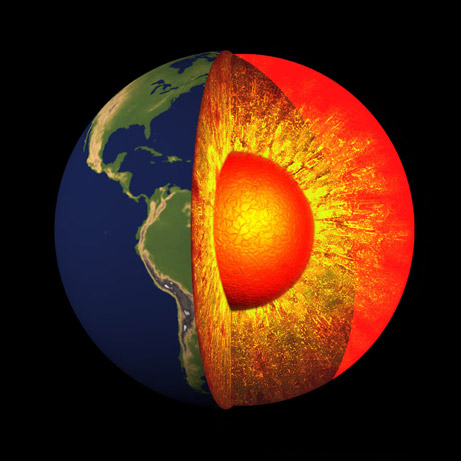
The first fire is that of the Sun. The Sun shines down on us, providing warmth, light, sustaining life. Our Sun is the Center of our Solar system around which all else revolves. Some Native American traditions say that there's a piece of Grandfather Sun's fire inside Mother Earth in the form of Earth's molten, hot core.


Fire is central to our lives - even in this modern era. Fire provides light and heat. Thanks to modern invention most of us no longer huddle by our central hearthplaces or campfires for warmth in winter's chill as did our ancestors; still, fire is central to our lives. We have woodstoves & forced air heating, but the elemental power of fire is still there—behind the warmth provided. We have replaced torches and candles with electric lighting; still the power of fire is behind the light provided. And the power of fire operates within our bodies. We all know that our body temperature must stay within a narrow range of degrees for health to be maintained: too high or low indicates a problem of some sort. We use the power of fire to cook our food, and it is the power of fire that enables us to digest our food and thus maintain life. Fire brings illumination to our lives, keeps us warm, enables nourishment and thus life.

"Domesticated" Fire lives in the hearth; that is it's natural home. A hearth is a place that not only generates heat and light, but also is a place where we receive nourishment for body & soul. Indeed, ideas of nourishment, warmth, love and comfort are inextricably wound together around the symbol of the hearth. In the small homes of our ancestors, families gathered around the hearth for light, warmth and companionship. It is a natural and pleasant thing to gather around the source of warmth and nourishment—comfort. My family still does it, especially on winter nights.

This is all quite obvious, I realize, and not only that, but also basic—as in the sense of “basis of,” and "foundational." It has always been so. So basic in fact that we should not be surprised to find that throughout history our ancestors have honored the Goddess in the form of the Hearthfire Goddess. In Ireland it was Brigid, whose flame was kept by her priestesses in Kildare for unknown centuries. Hestia was the central flame and hearth of the ancient Greeks; Hestia’s Roman counterpart was Vesta, in whose temple young virgins served for 30 years, tending her flame, which was the Hearth of the Nation. In the Teutonic areas it was Mother Holle, the underworld  goddess whose oven baked loaves of life-sustaining bread and who shook her featherbed to make the snow fly upon the earth. In Russia it was the fierce wildwoman Baba Yaga, whose whirling house contained her very important pech, or oven, in (or on) which she slept.

(c) Margie McArthur, 1995